
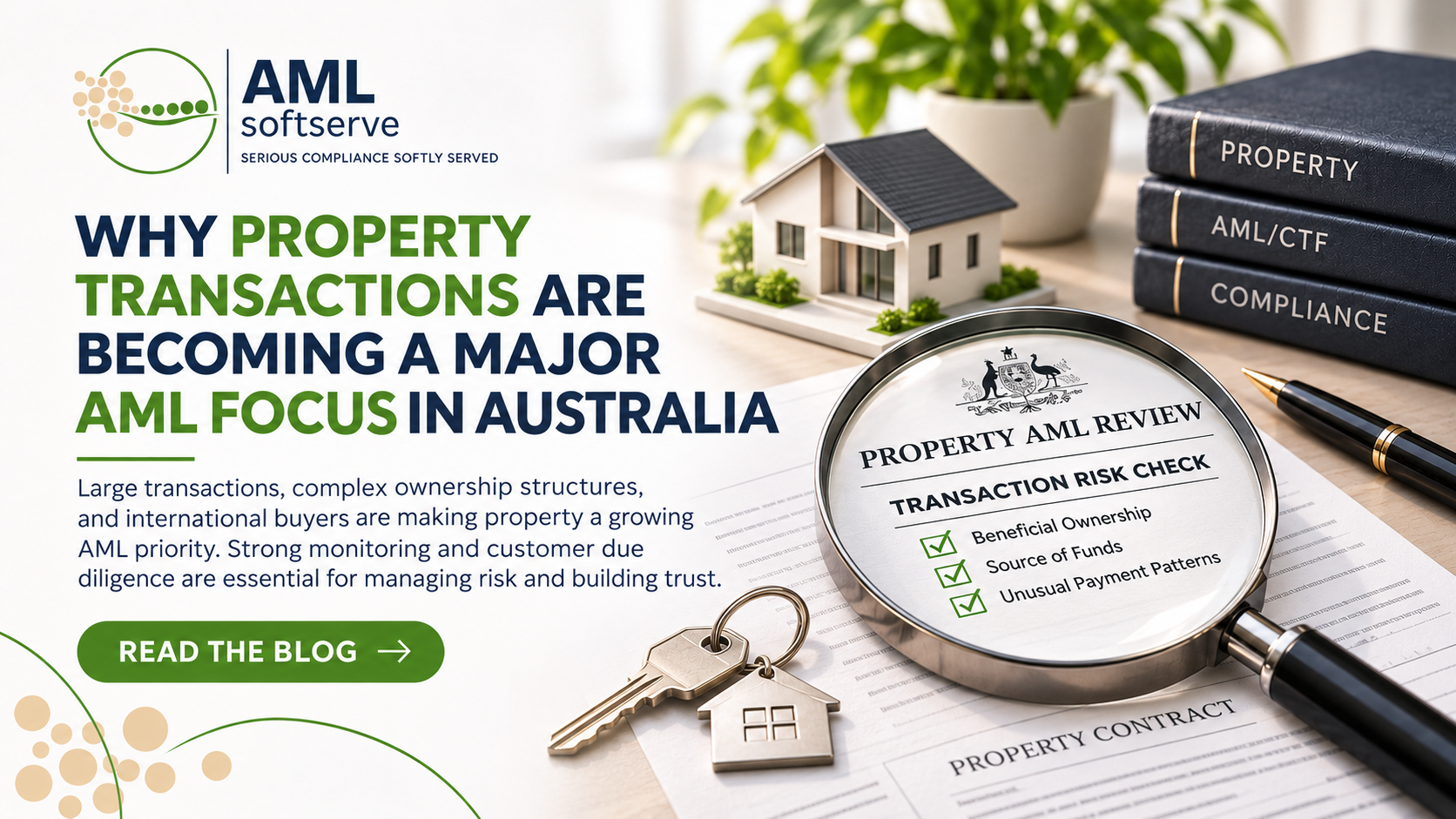
A property purchase can look completely ordinary. A buyer makes an offer. Contracts are signed. Payments are processed. Keys are handed over.
But behind some property transactions, there can be hidden risks that are far from ordinary.
Large amounts of money, complex ownership structures, international buyers, and high-value assets make the property sector an attractive target for criminals looking to disguise the source of illegal funds.
This is why property transactions are becoming a growing focus for AML compliance in Australia.
For businesses involved in real estate, conveyancing, property investment, and related services, compliance is no longer something that can be treated as a background responsibility.
The ability to identify suspicious activity, understand customer risks, and maintain effective AML processes is becoming essential for protecting businesses, customers, and the wider financial system.
Why Property Has Become a Key AML Concern
Property has always been considered a valuable asset.
Unlike many other purchases, real estate can involve millions of dollars, long-term ownership, and complicated financial arrangements. These characteristics can create opportunities for individuals attempting to hide the origins of funds.
Money laundering through property can happen in different ways, including:
- Purchasing property using illegally obtained funds
- Using complex company structures to hide ownership
- Overvaluing or undervaluing property during transactions
- Using third parties to disguise the real buyer
- Moving funds through multiple jurisdictions
For criminals, property can provide a way to convert questionable money into a legitimate-looking asset.
For businesses, this creates a responsibility to understand who they are dealing with and where the money involved in transactions is coming from.
The Changing Expectations Around AML Compliance
Many businesses once viewed AML obligations as something mainly associated with banks and financial institutions.
That perception is changing.
Regulators and industry bodies are placing greater attention on sectors where large financial transactions occur, including property-related activities.
The focus is shifting from simply collecting customer information to understanding risk throughout the relationship.
Effective AML compliance requires businesses to ask deeper questions:
Who is the customer?
Who ultimately owns or controls the asset?
Does the transaction match the customer's known financial profile?
Are there unusual patterns that require further investigation?
These questions help businesses identify potential risks before they become serious compliance issues.
Why Property Transactions Can Be Difficult to Monitor
Property deals often involve multiple parties.
A single transaction may include buyers, sellers, agents, legal professionals, lenders, investors, and other service providers.
This complexity can make it challenging to understand the complete picture.
Complex Ownership Structures
Some property purchases involve companies, trusts, or other legal arrangements.
While these structures can serve legitimate business purposes, they can also make it harder to identify the individuals who ultimately benefit from a transaction.
Strong AML processes help businesses identify beneficial owners and understand the real parties behind property activity.
High-Value Transactions
A single property transaction can represent a significant movement of money.
Large transfers require careful review because unusual payment patterns may indicate increased risk.
Automated AML monitoring and effective customer verification processes help businesses identify activity that requires attention.
International Connections
Australia’s property market attracts buyers and investors from around the world.
International transactions can introduce additional compliance considerations, including different jurisdictions, ownership structures, and potential sanctions risks.
Businesses need reliable processes to assess these factors and maintain appropriate records.
How AML Technology Helps Property Businesses Manage Risk
Manual reviews can become difficult when businesses handle large numbers of customers and transactions.
Technology can support stronger AML compliance by helping businesses monitor activity more efficiently.
Automated AML solutions can assist with:
Continuous Customer Monitoring
Customer risk does not remain unchanged after the first interaction.
A customer's circumstances, transaction behaviour, or risk profile may change over time.
Ongoing monitoring helps businesses identify when additional review may be required.
Faster Identification of Suspicious Activity
Technology can help analyse patterns that may be difficult to identify through manual checks alone.
This allows compliance teams to investigate unusual activity sooner and make informed decisions.
More Efficient Compliance Management
AML compliance involves documentation, reviews, alerts, and reporting.
A well-designed AML system helps businesses organise these processes while reducing unnecessary administrative workload.
The Risks of Weak AML Processes in Property
Failing to maintain effective AML practices can expose businesses to serious consequences.
Potential impacts include:
- Regulatory action
- Financial penalties
- Business disruption
- Reputation damage
- Loss of customer confidence
However, the impact goes beyond compliance requirements.
A business connected to questionable transactions may face long-term trust issues, even if the involvement was unintentional.
Strong AML processes help demonstrate that a business takes responsibility seriously.
Practical Steps Property Businesses Can Take
Review Customer Due Diligence Procedures
Businesses should regularly review how they collect, verify, and maintain customer information.
Customer due diligence should provide a clear understanding of who customers are and what risks may be associated with their transactions.
Identify Higher-Risk Transactions
Not every transaction carries the same level of risk.
Businesses should have processes that help identify situations requiring additional review, such as unusual payment arrangements, complex ownership structures, or inconsistent customer information.
Use Technology to Strengthen Compliance
The right AML technology can help businesses move from reactive compliance to proactive risk management.
Instead of discovering problems after they occur, businesses can monitor activity and respond earlier.
Building Trust Through Stronger AML Practices
Property transactions represent some of the biggest financial decisions people make.
Customers expect businesses involved in these transactions to operate responsibly and protect the integrity of the process.
Strong AML compliance is not just about avoiding penalties.
It is about creating confidence.
Businesses that invest in better monitoring, stronger customer checks, and practical compliance systems are better positioned to manage risks and build long-term trust.
As property transactions continue to receive greater AML attention in Australia, businesses that prepare early will be better equipped for the future.
Strengthen Your AML Compliance Approach with AML SoftServe
Managing AML obligations in property-related industries can be complex, but the right tools and support can make compliance more practical and effective.
AML SoftServe helps Australian businesses improve their AML compliance processes through solutions designed to support customer monitoring, risk management, and ongoing compliance requirements.
Contact us to discover how your business can build a stronger AML framework and confidently manage changing compliance expectations.